Washingtonia filifera: early warning of its invasion in Cuba
Keywords:
Alien species, naturalization, ornamental palm, VaraderoAbstract
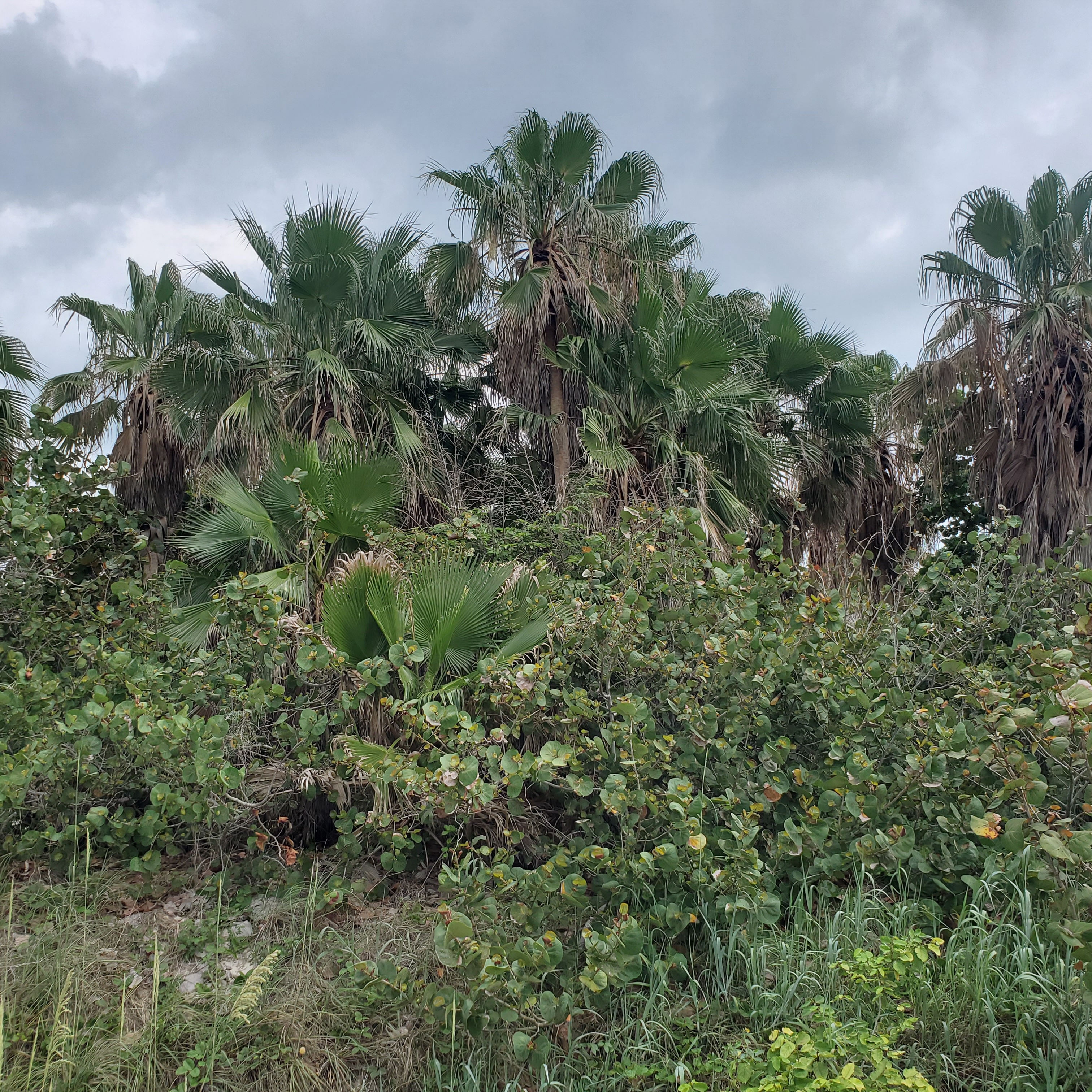
Washingtonia filifera, an ornamental palm native to southwestern North America and northwestern Mexico, was observed growing spontaneously in coastal environments of Varadero, Matanzas, Cuba. In May 2026, numerous individuals were recorded outside cultivation on the Hicacos Peninsula, including adults, juveniles and seedlings in sandy dunes, ruderal vegetation, mangrove edges and dry forest. The presence of different developmental stages indicates local regeneration and suggests an incipient naturalization process. This record constitutes an early warning of its invasive potential in Cuban coastal ecosystems and supports the need for monitoring and preventive control.
Received: May 24, 2026
Accepted: June 5, 2026
Published online: June 22, 2026
Correspondence: Raúl M. Verdecia Pérez (verdecopernicia@gmail.com)
Citation: Verdecia, R.M. & Hernández, Y. 2026. Washingtonia filifera: alerta temprana sobre su invasión en Cuba. Caribea 2(1): 24–27. https://doi.org/10.70925/caribea2.24-27
Author Contributions: RMVP: conceptualization, validation, writing - original draft, writing - review and editing. YHR: methodology, data curation, writing – review and editing, and visualization. All authors have read and agreed to the published version of the manuscript.
Conflicts of Interest: The authors declare no conflict of interest.