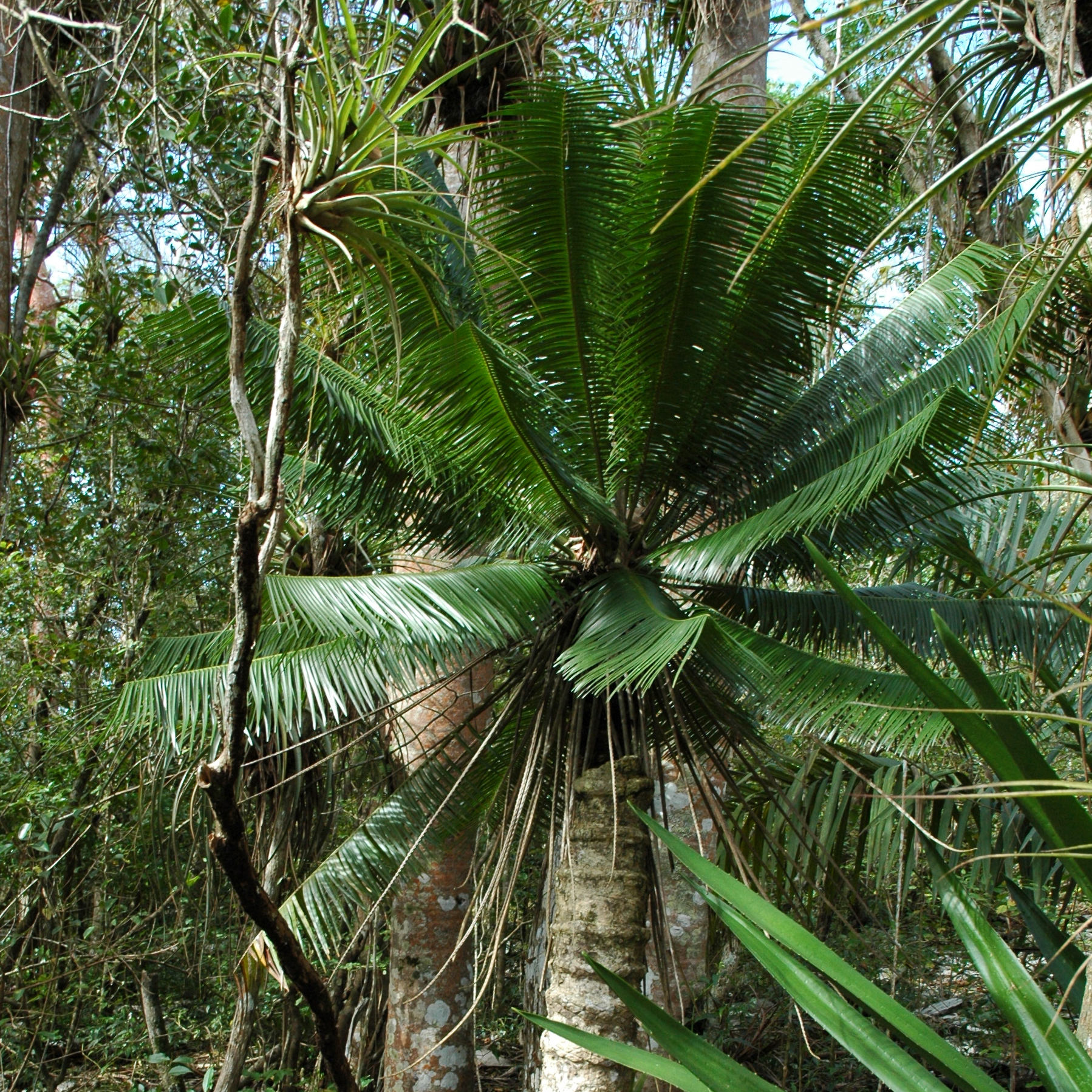
Recovery Strategy for Microcycas calocoma
Keywords:
threats, conservation, Cuban endemic genus, Endangered, cork palmAbstract
Microcycas calocoma is a tree endemic to western Cuba, restricted to the Guaniguanico range in Pinar del Río province. The species is considered Endangered (EN) because it has an extent of occurrence of 814 km² and an area of occupancy of 33 km², with a fragmented population distributed across four localities and an inferred continuing decline in area of occupancy, extent and quality of habitat, number of localities or subpopulations, and number of mature individuals. The main threats are habitat destruction and fragmentation caused by agricultural development, intentional fires associated with grazing, forestry activities, coffee cultivation, subsistence agriculture, deforestation, selective logging, invasive exotic species, feral pigs, quarrying, hydraulic infrastructure, and direct collection of plants. This recovery strategy aims to reduce the pressure of threats on the population, increase the number of individuals through nursery propagation and controlled reintroductions, strengthen ex situ conservation, promote environmental education and the cultural value of the species, and establish population and genetic monitoring to evaluate the effectiveness of recovery actions. The coordinated implementation of these measures is fundamental to the long-term viability of the species and its conservation.
Received: April 16, 2026
Accepted: June 20, 2026
Published online: November 3, 2026
Correspondence: Eldis R. Bécquer (pachyanthus@gmail.com)
Citation: Breto, D., Breto, D., Geada, G. & Bécquer, E.R. 2026. Estrategia de recuperación de Microcycas calocoma. Caribea 2(1): 28–33. https://doi.org/10.70925/caribea2.28-33
Author contributions: DBB, DBB, GGL: Investigation, methodology, data curation, and writing – review and editing. ERB: Conceptualization, validation, and writing – original draft. All authors have read and agreed to the published version of the manuscript.
Conflicts of interest: The authors declare no conflict of interest.